Context
Facilitators of poetic medicine bring curated material and workshop prompts to prisons, hospitals, and high-stress environments. Selecting works that will connect with the audience is critical, challenging, and time-consuming.
I conducted a two-part research study while building a platform to mitigate this and differentiate the Institute for Poetic Medicine as a leader in the space.
Preliminary Research
I interviewed facilitators about how they organized for workshops and identified an initial feature set that would prove valuable:
A curated selection of proven works
Example writing prompts to draw from
A way to keep track of favorite pieces that are used frequently
Prototype
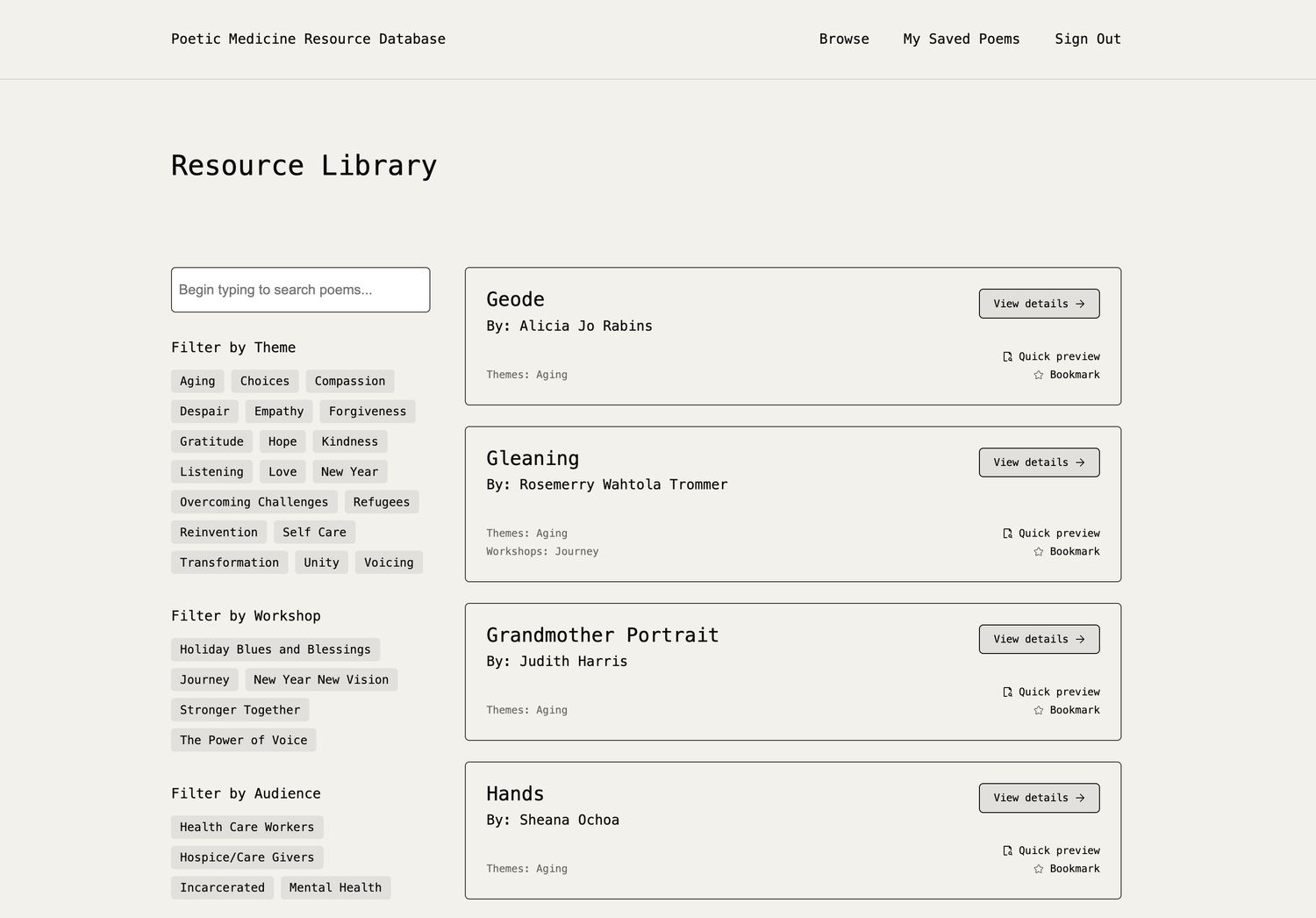
I built a database that could be curated by senior facilitators for more junior members to draw from. The database features several key components:
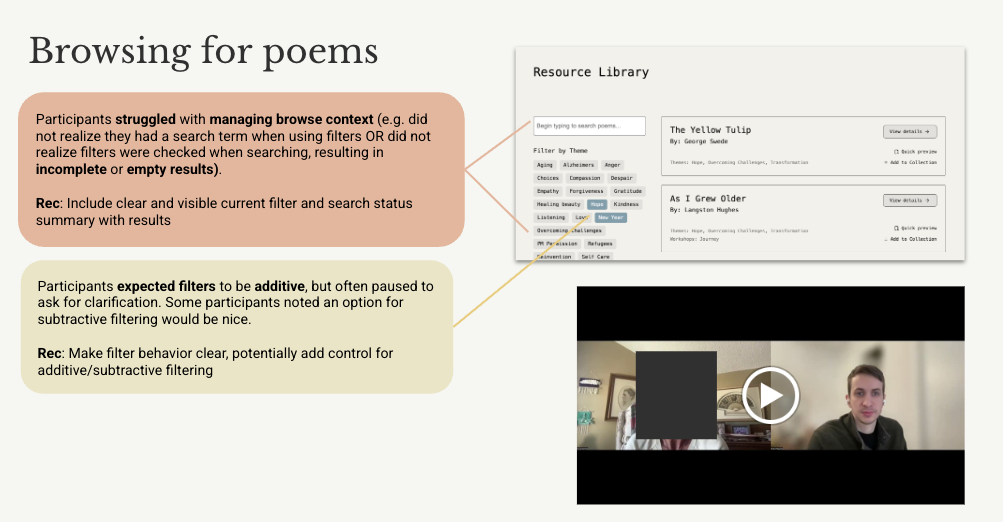
Rich taxonomy based filtering by themes, workshops, and intended audience
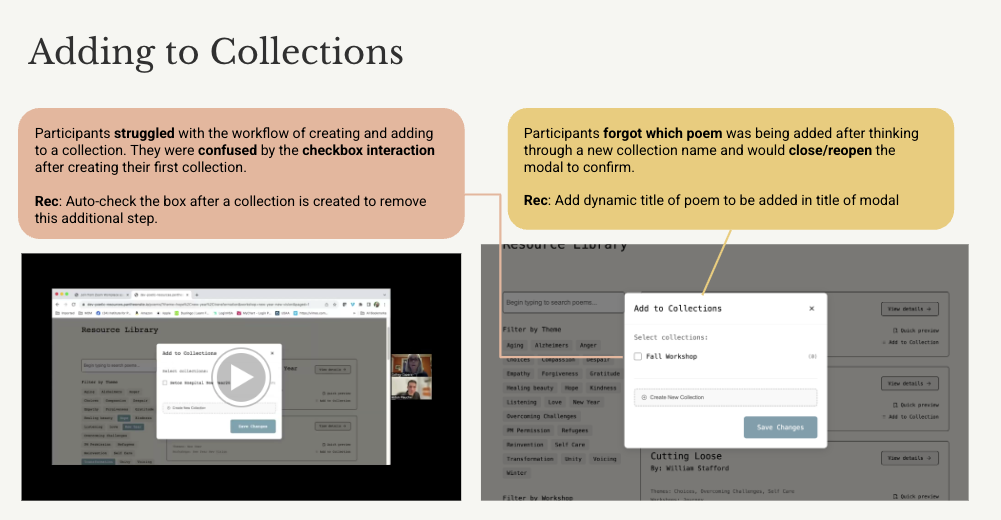
Bookmarking functionality
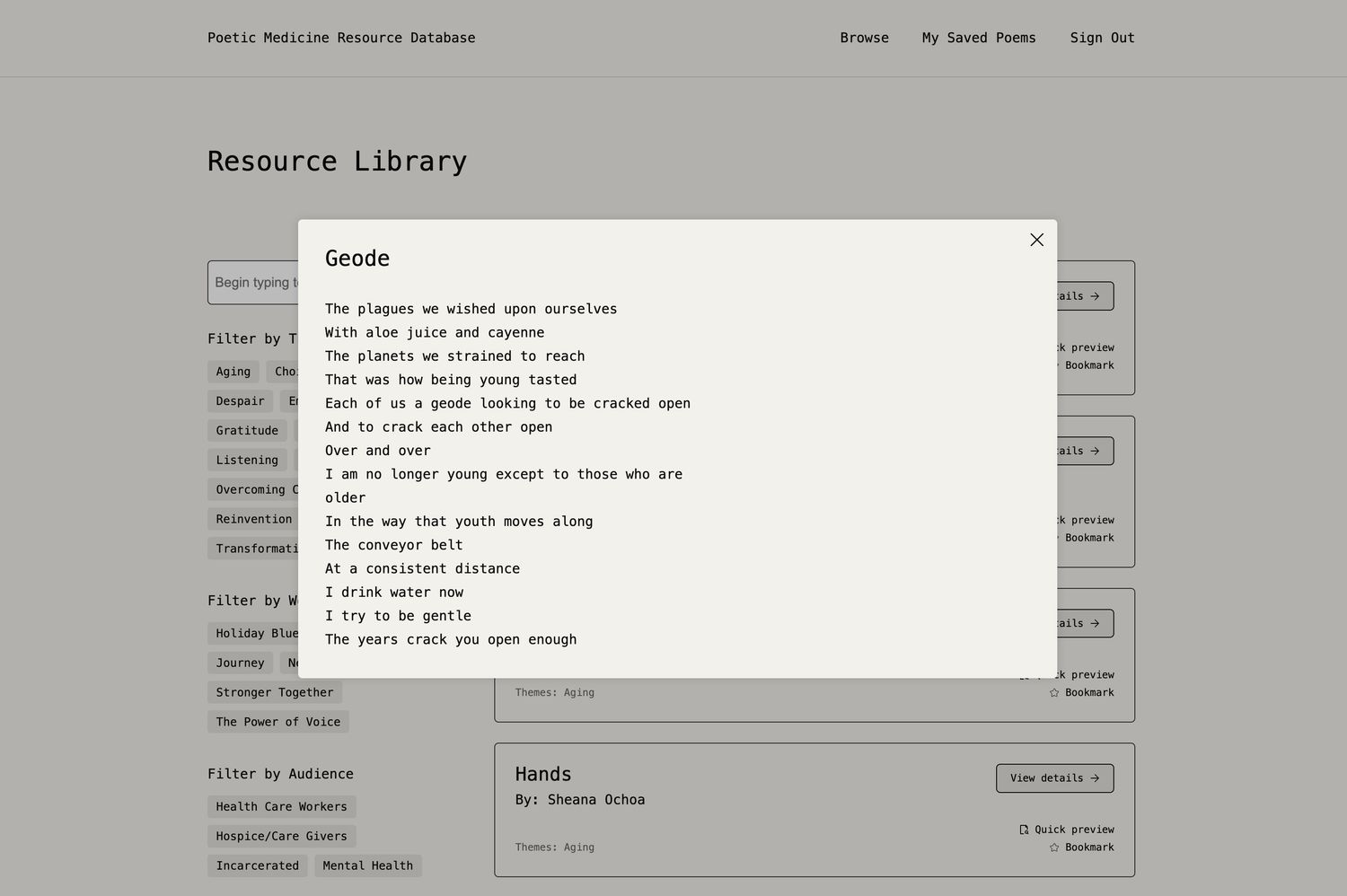
A quick preview, allowing an easy way to skim through search results without forward/back navigation
Automatic PDF generation to easily print handouts directly from the site
Phase 2 Validation
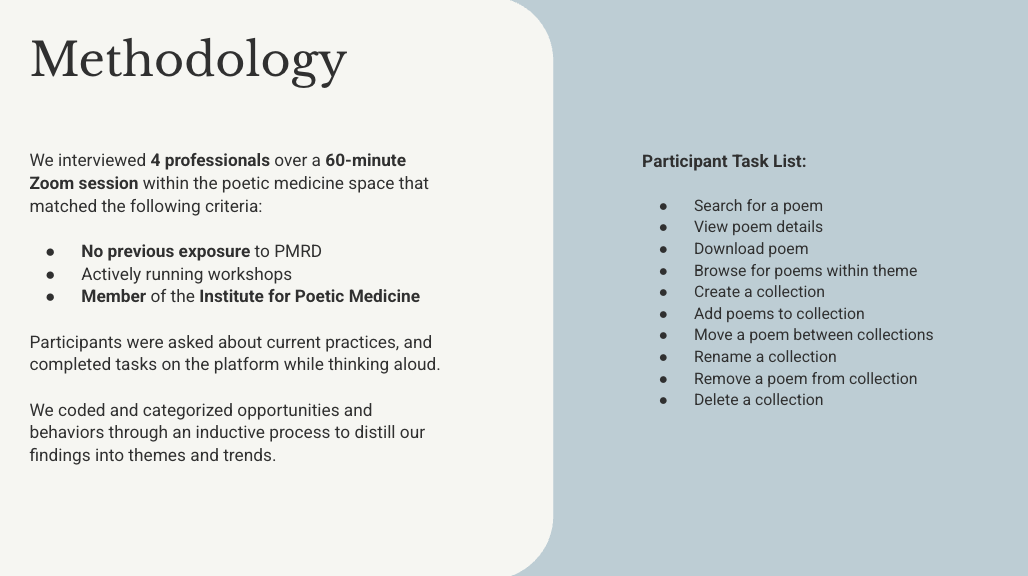
I next conducted more in-depth usability sessions with participants that were completely new to the platform to validate the features included in the initial prototype and explore opportunities to improve the end product.
Observation of pain points
Facilitators interviewed during this project had typically collected hundreds (maybe thousands) of curated poems and organized the saved/scanned PDFs into desktop or cloud storage folders. For repeat workshops, this worked well and the process was fairly smooth.
For new workshops, however, this proved difficult to navigate as some folders focused on themes, while others were workshop specific. Certain poems might exist in many different folders, while others would only exist in the specific context of a workshop folder, and be missing from where one might expect otherwise.
Going through poems was also tedious, as it involved opening each to view the poem content. Often document formatting varied between poems requiring some amount of editing before being ready to print.
Sometimes writing prompts were included in edited versions of poem documents, others were by themselves within associated workshop folders. Again, this led to duplication/omission issues.
Building a solution
The most immediate need that became clear was a centralized source of truth for organization via structured taxonomies.
Through interviewing and initial observation, the three taxonomies that stood out were theme, workshop, and audience.
Another latent need that stood out was the ability to skim a lot of poems quickly. This led me to add the “quick preview” functionality that brings up the poem contents in a quickly dismissible modal, so that the user will not lose their place in the list when viewing a poem.
Validating the solution
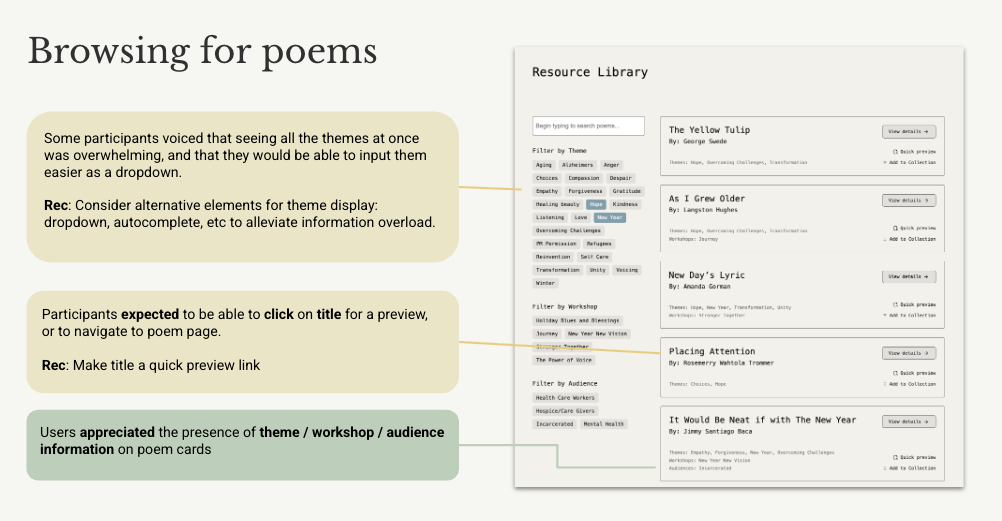
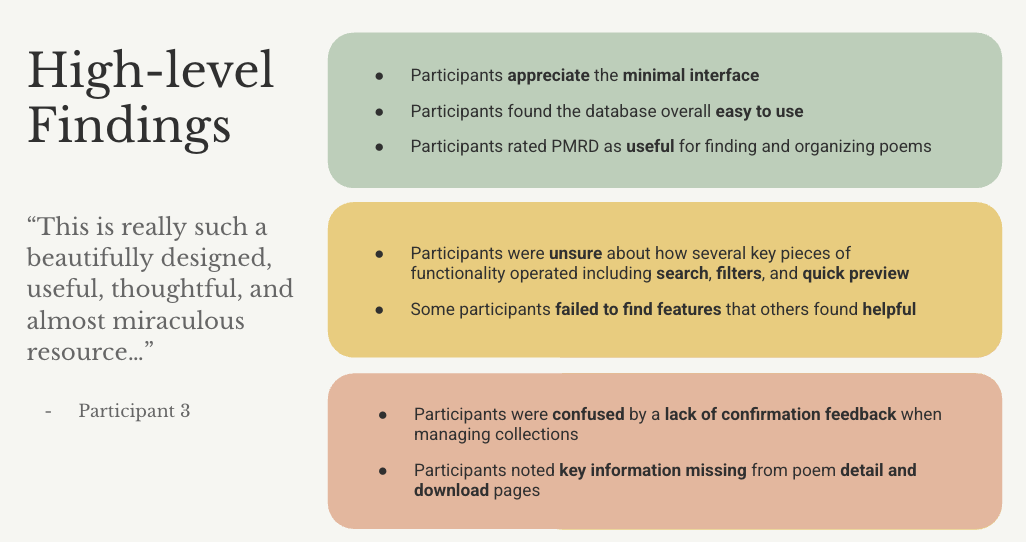
During the phase 2 usability studies, the functionality of the prototype was put to the test with brand new users. I discovered a few areas with usability issues, as well as opportunities to improve the platform overall.
Below are some slides taken from my findings report:
(Note: videos are excluded for participant privacy)
Next Steps
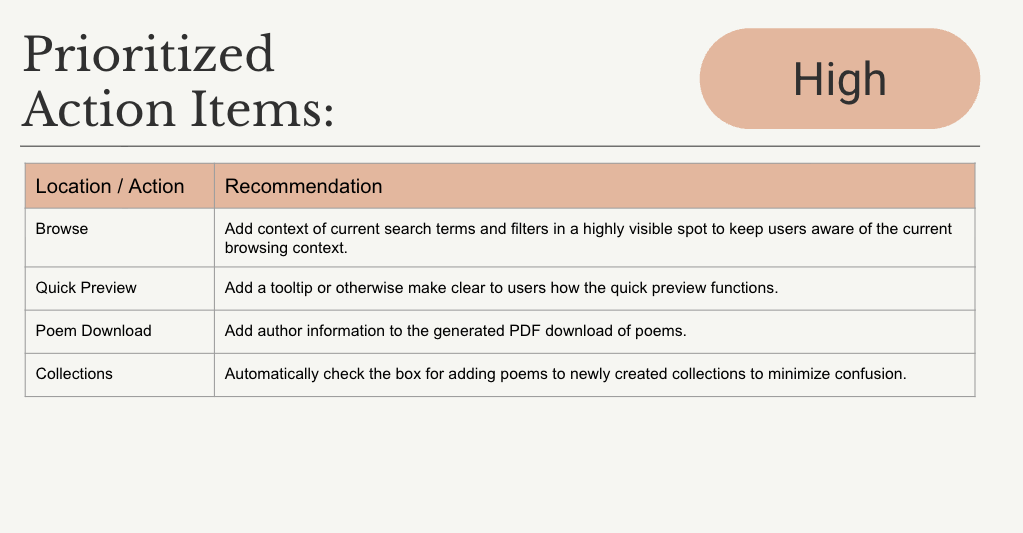
At the end of the report, I also captured everything as prioritized action items to help facilitate rapid implementation of fixes, especially for urgent items.

Results
Overall the phase 2 validation sessions went very well, I uncovered some great insights on areas with room for improvement, but also facilitators were extremely excited and optimistic about the potential of the platform overall.
The platform is about to be released to early facilitators in beta form to test and make additional feature requests.
I’m excited to see how this helps lighten the administrative load and lets practitioners focus more on the field work.